Deity of the Week: Freja

Freja is often introduced as a goddess of love and beauty, then quickly proves too vast for that simple frame. She is golden and sensual, yes. She is also a sorceress, a chooser of the dead, a fierce guardian of desire, and one of the most compelling figures in Norse myth.
Her name is commonly written Freyja in Old Norse contexts and Freja in modern Scandinavian spelling. Both point to the same radiant figure: a Vanir goddess whose presence touches love, fertility, pleasure, magic, wealth, grief, and personal power.
For modern devotees and witches, Freja offers more than aesthetic inspiration. Working with her can invite a deeper relationship with self-worth, embodied joy, intuitive magic, and the courage to want what you truly want.

Who Freja is in Norse mythology
Freja belongs to the Vanir, a family of deities linked with fertility, prosperity, the land, magic, and the rhythms of life. After the war between the Aesir and Vanir, she comes to dwell among the Aesir alongside her father Njord and her brother Freyr. This movement between divine clans mirrors her own nature. She crosses boundaries easily.
Freja is associated with:
Love, attraction, and sensuality
Fertility, abundance, and growth
Beauty, adornment, and pleasure
Gold, treasure, and desire
Seidr, a form of Norse magic linked with fate and trance
Cats, falcon feathers, and the boar Hildisvíni
The dead, especially fallen warriors
Sovereignty over the self
Her hall is Sessrúmnir, located in Fólkvangr, a field where she receives half of those slain in battle. Odin receives the other half in Valhalla. This single detail disrupts any narrow reading of Freja as only soft or romantic. She has a claim over death, honor, and the afterlife.
Freja is married to Óðr, a mysterious figure who is often absent. In some accounts, she searches for him and weeps tears of red gold. She has two daughters, Hnoss and Gersemi, whose names are associated with preciousness and treasure. The language around Freja glows with value. Gold, gems, longing, beauty, and grief all gather around her.
The stories that reveal her power
Freja’s myths are full of bargains, refusals, longing, and magic. They show a goddess who is desired by others, yet rarely controlled by them.
The Brísingamen necklace shows the cost of desire
One of Freja’s most famous attributes is Brísingamen, a magnificent necklace. Later sources tell a story of Freja acquiring it from four dwarfs, though details vary and the surviving material comes through complicated Christian-era texts.
Even with caution around the source, Brísingamen remains a key symbol in Freja devotion. It represents beauty with power behind it. It is not passive decoration. It is treasure chosen, claimed, and worn openly.
In spiritual practice, Brísingamen can stand for:
Knowing your worth
Honoring beauty as sacred rather than shallow
Making peace with desire
Claiming visibility without apology
Freja’s adornment is not vanity in the thin sense. It is presence. It says, “I am here, and I know my value.”
The giant who wanted Freja as payment meets divine refusal
In one myth, a builder offers to construct a wall around Asgard. His requested payment includes the sun, the moon, and Freja as his bride. The gods consider the bargain, then panic as the builder nears success.
The story is often remembered for Loki’s role in solving the problem, but Freja’s place in it matters. She is treated as a prize in a divine negotiation, and the crisis forms around the idea that she might be handed away.
Modern readers often notice the sharp lesson beneath the myth: Freja is not a reward to be transferred. She embodies attraction and desire, but she is not an object. Devotion to her should respect consent, agency, and self-possession.
The stolen hammer story reveals her fury
In the poem often called Þrymskviða, Thor’s hammer Mjölnir is stolen by the giant Thrym, who demands Freja as his bride in exchange for its return. Thor and Loki go to Freja with the idea.
Freja’s response is explosive. She becomes so angry that the halls shake, and Brísingamen breaks or trembles at her chest. She refuses.
The gods then dress Thor as the bride instead, with Loki as attendant, and recover the hammer through comic deception. Freja does not need to be sacrificed for cosmic order. Her “no” stands.
This story is one of the clearest glimpses of her fire. Freja’s love is not submission. Her beauty is not compliance. Her fertility is not availability.
Freja and seidr connect her to fate and witchcraft
Freja is closely associated with seidr, a Norse magical practice connected with prophecy, trance, fate-weaving, and spirit work. The sources say she taught this art to the Aesir, and Odin himself learned it.
This is one reason modern witches often feel drawn to her. Freja’s magic is not separate from her sensuality or grief. It rises from the body, the voice, the altered mind, and the unseen threads connecting all beings.
Seidr as practiced in ancient Norse culture cannot be fully reconstructed with certainty. Modern practice often blends historical study, personal gnosis, trance work, devotional prayer, and ethical boundaries. That honesty matters. Freja rewards depth more than fantasy.

Freja’s sacred symbols and attributes
Freja’s symbols are rich because she lives at crossroads. She is tender and dangerous. Earthy and otherworldly. Erotic and death-wise.
Cats and the chariot
Freja is often shown riding a chariot drawn by cats. The image appears in later Norse tradition and has become one of her most beloved symbols. Cats fit her well. They are affectionate but independent, graceful but sharp, domestic yet never fully tame.
For modern devotion, cats can represent:
Boundaries
Sensual awareness
Quiet confidence
Watchful magic
Pleasure without guilt
A cat image on an altar can be a simple way to honor her, especially if living animals are already part of the home. Treat actual cats with care, not as ritual props.
The falcon cloak
Freja owns a cloak of falcon feathers that allows the wearer to fly in falcon form. Loki borrows it in myths when swift travel or transformation is needed.
The falcon cloak points to vision, speed, and spiritual mobility. In meditation, it can become a symbol of rising above confusion. It also connects Freja with shapeshifting, a common theme in magical traditions.
Gold and amber
Gold is one of Freja’s most powerful materials. Her tears become gold. Her daughters’ names suggest precious treasure. Her necklace shines with mythic value.
Amber also suits her well in modern practice. It carries warmth, sunlight, fossilized resin, and ancient memory. A piece of amber can serve as a focus for prayers about confidence, attraction, healing from shame, or creative renewal.
The boar Hildisvíni
Freja is also linked with the boar Hildisvíni, whose name is often translated along the lines of “battle swine.” The boar brings in protection, fertility, courage, and the wild strength of the land.
This attribute reminds us that Freja’s fertility is not only romantic or maternal. It includes the fertility of creative work, gardens, art, business ideas, friendships, and spiritual growth.
How Freja is revered in modern devotion
Modern devotion to Freja appears in many settings, including Heathenry, Norse Paganism, eclectic witchcraft, goddess spirituality, and solitary practice. Some approach her through reconstructionist study. Others meet her through dreams, art, trance, or personal prayer.
Common devotional themes include:
Healing from shame around pleasure or beauty
Cultivating self-love and confidence
Strengthening magical intuition
Honoring sexuality with consent and respect
Calling in abundance and creative growth
Grieving love, loss, or longing
Protecting personal boundaries
Connecting with ancestral or Northern European spiritual paths
Freja is often loved by people who are rebuilding their relationship with desire. She teaches that wanting is not a flaw. Beauty is not weakness. Grief does not cancel power.
At the same time, Freja is not a spiritual vending machine for romance spells. Her energy is best approached with honesty, respect, and reciprocity. Ask where you need to become more whole, not only what you want to receive.
Offerings that suit Freja
Offerings do not need to be expensive. The best offerings carry sincerity, beauty, and care.
Good offerings for Freja include:
Honey, mead, cider, or wine
Fresh flowers, especially fragrant or wild blooms
Amber, gold-colored jewelry, or pretty beads
Apples, berries, cream, or bread
Cat imagery or donations to animal rescue groups
Love poems, songs, or handmade art
Perfume, rosewater, or sacred oils
Acts of self-respect, such as keeping a boundary
If offering alcohol or food outdoors, follow local rules and protect wildlife. Many devotees prefer to place offerings on an altar for a short time, then dispose of them respectfully. Liquids can be poured on the earth if safe. Food can be composted when appropriate.
A simple spoken offering can be enough:
Freja, Lady of Fólkvangr, golden one, keeper of magic and desire, accept this gift in honor and respect.
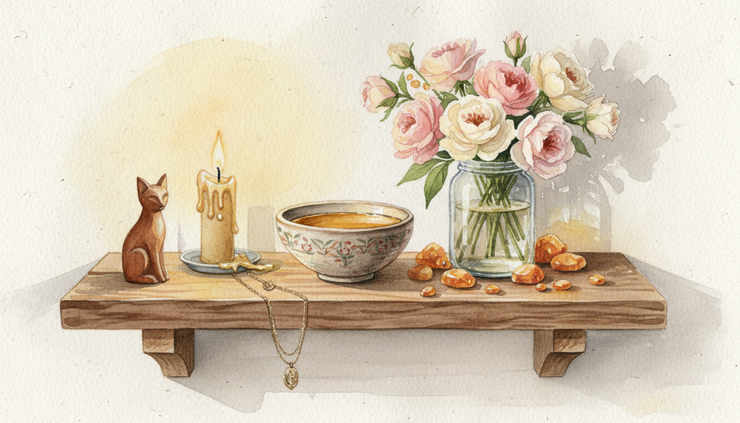
Rituals for connecting with Freja’s energy
These practices are gentle, flexible, and suitable for beginners. Adapt them to your tradition, comfort level, and available space.
Create a beauty and self-worth ritual
This ritual works well on a Friday, during a waxing moon, or whenever you need to remember your value.
Gather:
A candle in gold, pink, red, white, or green
A mirror
A small offering
A piece of jewelry, perfume, or oil
Light the candle. Place the offering near it. Hold the jewelry or oil and say:
Freja, bright one, teach me to see myself with clear and loving eyes.
Look into the mirror. Name three qualities you genuinely value in yourself. They can be physical, emotional, creative, or spiritual. Put on the jewelry or oil as a sign of recognition.
Let the candle burn safely for a short time. Thank Freja before closing.
Practice a Freja meditation with the falcon cloak
Sit comfortably. Breathe slowly. Imagine a cloak of falcon feathers settling over your shoulders. It is light, strong, and warm.
As you breathe in, feel your awareness sharpen. As you breathe out, release the need to solve everything at once.
Picture yourself rising above a situation that has felt tangled. Look down from a higher view. Ask:
What am I not seeing?
Where have I given away my power?
What desire is asking for honest attention?
Do not force an answer. Notice images, words, body sensations, or silence. Write down what comes afterward.
Make a love spell that centers consent
Freja can support love magic, but ethical practice matters. Instead of trying to control a specific person, focus on becoming open to loving, mutual connection.
Write a petition such as:
“May I welcome love that is honest, joyful, mutual, and free.”
Place it under a candle with rose petals, honey, or a small piece of amber. Speak your request to Freja. Let the ritual strengthen your readiness for healthy love, not override another person’s will.
Honor Freja through pleasure and care
Devotion does not always need formal ritual. Freja can be honored through fully inhabited, mindful pleasure.
Try one of these acts as an offering:
Wear something that makes you feel beautiful
Cook a meal with care and savor it slowly
Dance alone to music you love
Buy or gather flowers for your altar
Write a poem about longing, confidence, or desire
Take a cleansing bath with herbs that are safe for your skin
Protect your time by saying no when you mean no
The key is attention. Offer the act to Freja before you begin, then experience it without apology.
Working with Freja in witchcraft
In witchcraft, Freja’s energy often appears in spells for love, charm, fertility, abundance, seidr-inspired trance, protection, and personal magnetism. She fits especially well in work that combines beauty with will.
A Freja-inspired spell jar might include honey for sweetness, rose petals for love, basil for prosperity, amber-colored resin for warmth, and a written intention. A charm bag might hold gold thread, dried apple peel, catnip, and a small bead that represents Brísingamen.
For trance work, many practitioners drum, chant, rock gently, or use breath to enter a light altered state. Keep the practice grounded. Set a clear beginning and end. Avoid trance when driving, caring for children, or doing anything that needs full attention.
A simple grounding method after Freja work:
Touch the floor or ground
Name five things you see
Drink water
Eat something plain
Thank Freja and close the space
This helps integrate the experience instead of floating away with it.
A simple weekly devotional practice
If you want a steady connection, make it small enough to keep.
Choose one day each week. Many people choose Friday because of its association with love goddesses in Germanic and Norse-influenced traditions, though the history is layered and not limited to Freja.
Set up a small space with a candle, a cup of water or honeyed tea, and one beautiful object. Light the candle and speak from the heart. You can pray, sing, journal, pull a rune, or sit in silence.
Ask Freja one question:
“What part of my life needs more courage, beauty, or truth?”
Listen. Then take one clear action during the week. That action might be sending a message, cleaning your altar, applying for an opportunity, ending a draining habit, or making art.
Devotion grows through repeated relationship. Grand gestures have their place, but consistency builds trust.

Signs and experiences in Freja devotion
People often describe Freja’s presence as warm, direct, sensual, regal, or emotionally intense. Some notice cats, falcons, amber, gold, roses, music, or sudden confidence appearing around devotional work.
Personal signs are meaningful, but discernment matters. Not every cat crossing your path is a divine message. Look for patterns, timing, emotional clarity, and whether the experience leads toward greater integrity.
Freja’s guidance may feel like encouragement, but it may also challenge you. She may push on questions such as:
Are you confusing longing with love?
Are you hiding your beauty to stay safe?
Are you asking for abundance while refusing to receive?
Are your boundaries strong enough to protect your joy?
Are you willing to grieve what is gone and still choose life?
That is part of her gift. Freja does not flatten love into sweetness. She holds love as a force that can transform, expose, and renew.
Walking with Freja
Freja, the Norse goddess of love, beauty, and fertility, is much more than a romantic figure. She is gold and grief, magic and appetite, pleasure and battle-wisdom. Her myths reveal a goddess who knows her worth, refuses to be traded, teaches powerful magic, and moves between life, death, and desire with unmistakable authority.
To connect with her, begin simply. Light a candle. Offer honey or flowers. Speak honestly. Wear something that helps you feel present in your body. Ask for the courage to honor your desires without losing your boundaries.
Freja’s path is not about becoming flawless or endlessly attractive. It is about becoming more alive, more truthful, and more willing to claim the sacred value already within you.


Comments