Crystal Magick Guide for Beginners

Updated: Aug 1
Crystals are easy to love before you ever learn what to do with them. A piece of amethyst catches the light. A tumbled rose quartz feels soothing in the palm. A clear quartz point looks like it belongs on an altar. Then the real question arrives: how do you use these stones in a meaningful way, and how do you care for them safely?
Crystal magick is a spiritual practice built around intention, symbolism, and focused attention. The crystal does not do the work for you. Instead, it becomes a tool that helps you return to your purpose, whether that purpose is protection, clarity, grounding, love, rest, courage, or reflection.
This beginner guide covers the most common crystal types, how shapes affect magickal use, what sunlight and water can damage, and simple ways to start practicing without overcomplicating it.

What crystal magick means in practice
Crystal magick works best when it stays practical. A crystal can serve as:
A focus object during meditation or spellwork
A symbol for a quality you want to invite or strengthen
A reminder of an intention you set
A ritual tool for altar work, moon practices, journaling, or energy cleansing
A decorative anchor for a sacred space
For example, if you carry black tourmaline for protection, the stone reminds you to hold boundaries. If you keep amethyst by your journal, it can help mark that time as quiet and reflective. If you place clear quartz on an altar, it can symbolize clarity and direction.
The most useful crystal is not always the rarest one. It is the one you understand, care for, and use with purpose.
A beginner practice can be as simple as holding a stone, naming your intention, breathing slowly, and placing the crystal somewhere you will see it often.
Common crystals and their beginner-friendly uses
The meanings below come from common metaphysical traditions. Treat them as starting points, not strict rules. Your personal associations matter too. If a stone makes you feel focused, calm, or alert, pay attention to that lived response.
Crystal | Common magickal use | Beginner tip |
Clear quartz | Clarity, amplification, intention setting | Use it when you are unsure which crystal to choose. |
Amethyst | Intuition, calm, spiritual reflection | Keep near a journal or meditation space. |
Rose quartz | Love, compassion, emotional softness | Work with it for self-kindness, not only romance. |
Black tourmaline | Protection, grounding, energetic boundaries | Place near an entryway or carry during stressful days. |
Citrine | Confidence, creativity, abundance symbolism | Use it with goal-setting or solar rituals. |
Smoky quartz | Grounding, release, emotional steadiness | Hold it after intense conversations or busy days. |
Carnelian | Motivation, courage, creative fire | Keep it near art supplies, workout gear, or a workspace at home. |
Selenite or satin spar | Cleansing, peace, spiritual clarity | Keep it dry and use it to refresh an altar space. |
Labradorite | Intuition, transition, mystery | Use during new plans, personal changes, or dream journaling. |
Green aventurine | Growth, opportunity, heart-centered luck | Pair it with practical steps toward a goal. |
Hematite | Grounding, focus, stability | Hold it when you need to feel present in your body. |
Moonstone | Cycles, intuition, new beginnings | Use with lunar rituals or monthly reflection. |
A simple way to choose a crystal
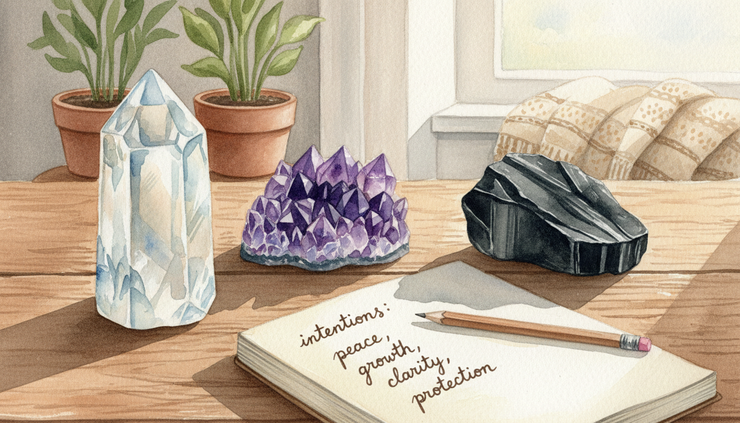
If you feel overwhelmed, start with three stones:
Clear quartz
A flexible all-purpose crystal for intention work.
Amethyst
A calming stone for meditation, intuition, and reflection.
Black tourmaline
A grounding stone for protection and boundaries.
This small set covers many beginner needs. You can add more later as your practice grows.
How crystal shapes affect magickal work
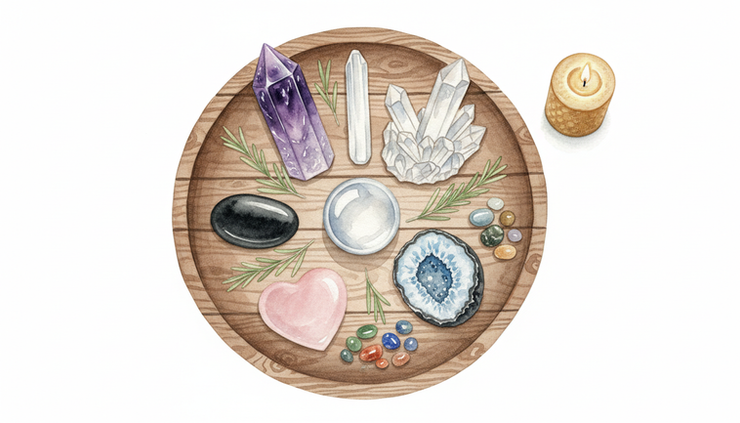
A crystal’s mineral type matters, but its shape matters too. Shape changes how a stone feels in the hand, how it sits on an altar, and how you might direct intention through it.
Think of shape as the “gesture” of the crystal. A sphere radiates evenly. A point directs. A palm stone comforts. A cluster fills a space.
Tumbled stones are easy everyday companions
Tumbled stones are smooth, polished, and usually affordable. They are ideal for beginners because they are simple to carry and comfortable to hold.
Use tumbled stones for:
Pocket charms
Meditation
Sleep sachets, if the stone is safe and not sharp
Travel altars
Daily intention reminders
A tumbled rose quartz in a pocket can become a quiet reminder to speak kindly to yourself. A tumbled smoky quartz can support a grounding pause before a difficult task.
Points and towers direct energy
Crystal points, towers, and obelisks are often used to send intention in a certain direction. The tip gives the eye and the mind a clear place to focus.
Use points and towers for:
Directing intention outward
Marking the center of an altar
Crystal grids
Focused spellwork
A clear quartz point can sit in the center of a small grid. A black obsidian point can symbolize strong protection. If the point faces outward, some practitioners read that as sending energy away. If it faces inward, they read it as drawing energy in.
Spheres radiate evenly
Spheres have no beginning or end. Many practitioners use them for balance, harmony, and wholeness.
Use spheres for:
Meditation
Room energy
Divination displays
Emotional balance rituals
A rose quartz sphere can symbolize compassion filling a room. An amethyst sphere can support quiet reflection on a nightstand or altar.
Clusters and geodes fill a space
Clusters have many points or crystal faces. They are often used to cleanse, brighten, or charge an area.
Use clusters and geodes for:
Altar centers
Shared spaces
Charging small objects
Bringing a sense of abundance or openness
Amethyst clusters are especially common for meditation areas. Clear quartz clusters are often used to refresh smaller tumbled stones, though this is a spiritual practice rather than a physical cleaning method.
Wands guide focused ritual work
Crystal wands are usually polished into long shapes. Many people use them for directing attention during ritual.
Use wands for:
Tracing a circle
Pointing to items on an altar
Guiding breathwork
Focusing visualization
A wand does not need to be expensive. Even a natural quartz point can serve the same purpose.
Hearts, palm stones, and worry stones support comfort
Heart shapes, palm stones, and thumb-groove worry stones are designed for touch. They work well for gentle practices.
Use comfort shapes for:
Self-compassion rituals
Grief support practices
Calm breathing
Bedside reminders
They are less about directing energy and more about holding presence.
How to use crystals in simple spiritual practices
You do not need a large collection, rare minerals, or complicated spells. Start with one clear intention and one stone.
Set an intention with one crystal
Try this beginner ritual:
Choose a crystal that matches your goal.
Hold it in both hands.
Take three slow breaths.
Name your intention in one sentence.
Place the crystal somewhere visible.
Examples of simple intentions:
“I return to calm when the day feels loud.”
“I protect my peace and respect my limits.”
“I welcome clarity before I make this decision.”
“I make steady progress with patience.”
Keep the wording plain. A clear sentence is stronger than a dramatic one you do not believe.
Create a small altar
An altar is a dedicated space for attention. It can be a shelf, tray, windowsill, or corner of a dresser.
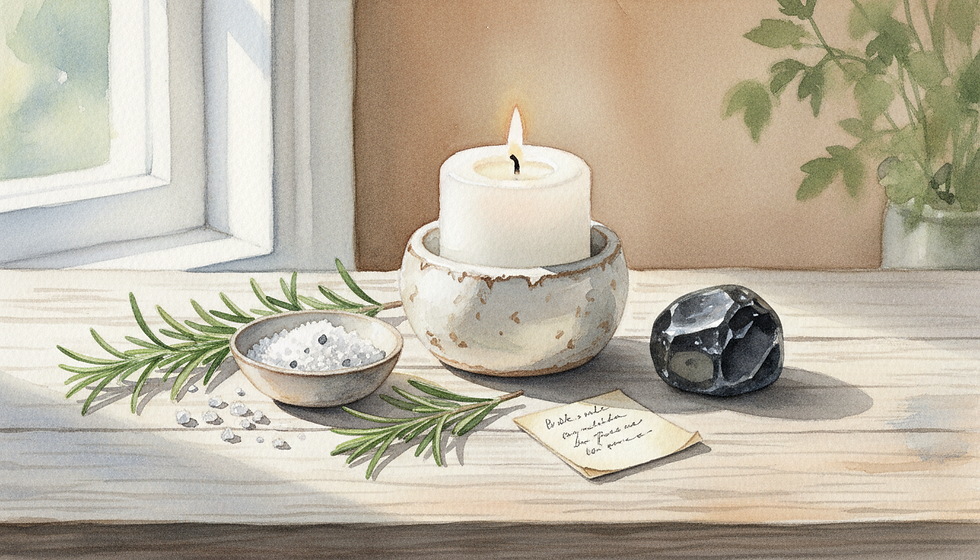
A beginner altar might include:
One crystal for the main intention
A candle or LED candle
A small bowl of herbs or salt
A journal
A meaningful photo, charm, or natural object
Keep it easy to maintain. If the space becomes cluttered or stressful, simplify it.
Meditate with a crystal
Hold the stone in your palm or place it nearby. Let it act as a physical anchor.
Try this:
Breathe in for four counts.
Hold for two counts.
Breathe out for six counts.
Notice the weight, texture, and temperature of the crystal.
Return your attention to your intention when your mind wanders.
This works especially well with palm stones, tumbled stones, and smooth pieces.
Make a basic crystal grid
A crystal grid is an arrangement of stones in a pattern. The pattern gives structure to your intention.
Begin with this layout:
Place one central stone for the main goal.
Add four supporting stones around it.
Arrange them in a square or cross.
Speak your intention once.
Leave the grid in place for a set period, such as one week or one lunar phase.
Clear quartz works well in grids because many practitioners use it to strengthen or clarify the intention of nearby stones.
Crystal care and safety limitations beginners should know
Crystals may look sturdy, but many are sensitive to sunlight, water, salt, heat, or rough handling. Good care protects the stone and keeps your practice safe.
Some crystals fade in sunlight
Direct sunlight can fade or change the color of certain crystals over time. A few minutes for a ritual is usually different from leaving a stone in a sunny window for weeks.
Crystals often listed as sunlight-sensitive include:
Amethyst
Rose quartz
Citrine
Smoky quartz
Fluorite
Celestite
Aquamarine
Practical tip:
Use moonlight, indirect light, sound, smoke, breath, or visualization instead of harsh sunlight when you are unsure.
Some crystals should not go in water
Water can dissolve, crack, rust, dull, or damage certain stones. As a loose rule, many very soft, flaky, metallic, or porous minerals should stay dry.
Crystals to keep away from water include:
Selenite and satin spar
Halite
Pyrite
Hematite
Malachite
Calcite
Lepidolite
Desert rose
Angelite
This matters for cleansing rituals, bath rituals, and crystal water bottles. Do not put unknown stones directly into drinking water. Some minerals can contain substances that are unsafe to ingest.
Safer alternatives include:
Place the crystal beside a glass of water, not inside it.
Use a sealed indirect infusion method only if you know the stone is safe and the container is secure.
Clean dusty stones with a dry soft cloth.
Use sound, incense smoke, or visualization for energetic cleansing.
Salt can scratch or damage some stones
Salt is popular in folk cleansing practices, but it can be abrasive. It can also pull moisture into small cracks.
Use caution with:
Soft stones
Polished stones
Porous stones
Any crystal with cracks or metal content
If you love salt cleansing, place the crystal in a small bowl and set that bowl inside a larger bowl of salt. The stone gets the ritual symbolism without direct contact.
Some crystals are fragile or sharp
Clusters, raw points, and geodes can break if dropped. They can also scratch surfaces or skin.
Handle fragile crystals by:
Lifting them from the base
Storing them separately
Wrapping them in cloth for travel
Keeping them away from pets and small children

How to cleanse and charge crystals without damaging them
Cleansing and charging are spiritual terms in this context. Cleansing means clearing old associations or stagnant energy. Charging means refreshing the crystal for a new intention.
Beginner-safe methods include:
Breath
Hold the crystal and exhale gently over it while imagining old energy clearing away.
Sound
Ring a bell, use a singing bowl, or clap softly near the stone.
Smoke
Pass the crystal through incense or herb smoke if it is safe for your space and lungs.
Moonlight
Place crystals near a window or outside in a protected dry spot overnight.
Visualization
Imagine clean light surrounding the crystal and resetting it for your purpose.
Selenite plate or bowl
Use only as a dry resting place for other stones.
You do not need to cleanse crystals constantly. Cleanse them when they feel energetically “heavy,” after intense rituals, after someone else handles them, or before setting a new intention.
A simple beginner crystal routine
Here is a low-pressure weekly practice:
Choose one theme
Pick a focus such as rest, courage, protection, clarity, or compassion.
Select one crystal
Match the stone to the theme, or choose the one that feels right.
Cleanse it gently
Use breath, sound, or moonlight if you are unsure about water or sun safety.
Set one intention
Say it out loud or write it in a journal.
Place it with purpose
Put it near your bed, altar, door, journal, or meditation space.
Reflect at the end of the week
Ask what changed, what you noticed, and whether the crystal helped you stay mindful.
This routine keeps crystal magick grounded. It also helps you learn through experience instead of memorizing long lists.
Final thoughts on starting with crystal magick
Crystal magick does not need to be expensive, rare, or complicated. Start with a few stones, learn their care needs, and use them with clear intention. Notice how each crystal feels in your hand, where it seems useful, and which practices you actually repeat.
The best next step is simple: choose one crystal you already own, cleanse it safely, give it one clear purpose, and work with it for a week. Let your practice grow from attention, care, and consistency.


Comments