Protection Spells Explained

A protection spell is less like a fantasy force field and more like a spiritual boundary made visible. It gives shape to an intention many people already carry every day: “May this home, body, path, and mind be safe.”
Protection magic appears in many forms across human history. A charm over a doorway, a whispered blessing before travel, a circle of salt, a candle lit for peace, a prayer spoken over a child, a blue eye bead hung near an entrance, each one points to the same deep need. People want to feel guarded, grounded, and connected to something larger than fear.
This guide explains what protection spells are, how different traditions understand them, and how to practice simple warding, shielding, and banishing magic with care.
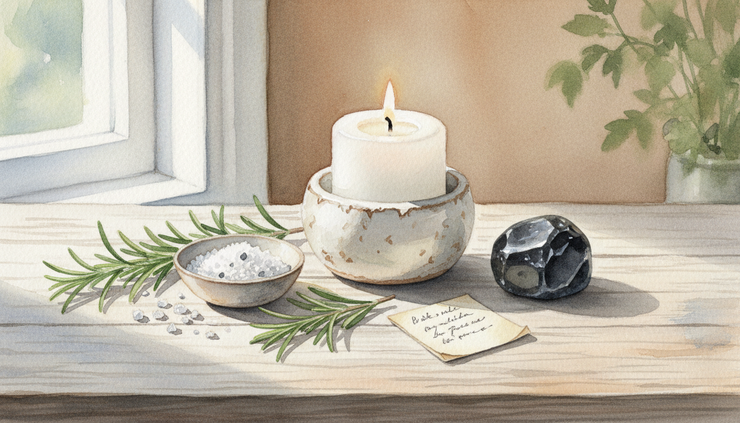
What protection spells are and why they matter
Protection spells are rituals, prayers, charms, or focused acts of intention meant to guard a person, place, object, or situation from unwanted influence. That influence might be emotional stress, spiritual unease, bad luck, intrusive energy, or the heavy feeling left behind after conflict.
At their core, protection spells usually combine three things:
Intention
A clear statement of what the spell is meant to do.
Symbol
An object, element, gesture, word, or action that carries meaning.
Repetition or activation
A way to “set” the spell, such as speaking aloud, tying a knot, lighting a candle, tracing a symbol, or placing a charm.
For some practitioners, the power comes from spirits, ancestors, deities, saints, angels, land guardians, or divine presence. For others, it comes from personal will, the natural elements, or the psychology of ritual. Many people hold a view somewhere in the middle.
Protection magic also has a practical side. When someone cleans a home, speaks a blessing, and places a protective charm by the door, they are not only “doing magic.” They are marking a boundary. They are telling the nervous system, the household, and the spirit of the place, “This space is cared for.”
Protection work is strongest when it supports real-world care. Lock the door, trust your instincts, ask for help when needed, and use magic as one part of a wider safety practice.
Protection magic across cultures
Protective ritual is not limited to one path. Nearly every culture has developed ways to bless, guard, cleanse, or shield.
In Mediterranean and Middle Eastern cultures, the evil eye is a well-known concept. Protective objects such as the blue nazar charm are used to deflect envy or harmful attention. The hamsa, a hand-shaped symbol found in several religious and cultural contexts, can also represent blessing and protection.
In Jewish tradition, a mezuzah is placed on doorposts as a sacred reminder of faith and divine presence. In Catholic and Orthodox Christian traditions, medals, holy water, saint prayers, and house blessings can serve protective roles. In Japanese spiritual life, ofuda and omamori from Shinto shrines or Buddhist temples may be kept for protection, luck, or safe travel.
Many folk practices use salt, iron, herbs, smoke, bells, knots, or spoken charms. In parts of Europe and the Americas, people have placed iron near thresholds, hung protective herbs, or swept a home from back to front to remove unwanted energy. Across African diasporic, Indigenous, and folk traditions, protection practices can be deeply rooted in community, ancestry, and sacred responsibility.
This wide history calls for respect. Some practices are open and widely shared. Others are tied to initiation, lineage, religion, or community identity. A respectful practitioner learns the difference, avoids taking closed rituals out of context, and does not treat sacred objects as decorations.
Protection Spells Explained How to Practice Ward Shield and Banishing Magic is really a study of relationship: with space, spirit, culture, and personal responsibility.

The main types of protection spells
Protection magic has many branches, but three of the most useful categories are warding, shielding, and banishing. They often overlap, yet each one has a different purpose.
Warding creates a boundary around a place or object
Warding is protective magic placed around a space, object, or threshold. A ward might guard a bedroom, home, altar, car, garden, or piece of jewelry.
Common warding methods include:
Placing salt or protective herbs near doors and windows
Drawing symbols under a doormat or on paper
Hanging bells, charms, or protective knots
Anointing doorframes with blessed water or oil
Setting stones such as black tourmaline, obsidian, or hematite near entrances
A ward works like a spiritual “no entry” sign. It does not need to be dramatic. A quiet blessing spoken over a front door can be just as meaningful as a long ritual.
Shielding protects the personal energy field
Shielding is personal protection. Rather than guarding a place, it focuses on the body, aura, or inner state. People often use shielding before entering crowded spaces, emotionally charged conversations, hospitals, family gatherings, or intense spiritual work.
A simple shield visualization might look like this:
Breathe slowly.
Imagine light gathering in the center of the chest.
Let that light expand around the body.
Shape it into a clear boundary.
State that only helpful, loving, and appropriate energy may pass through.
Some people picture white light, mirrored glass, a cloak, a sphere, a wall of thorns, or the strength of a mountain. The image matters less than the clarity behind it.
Banishing removes what is unwanted
Banishing magic focuses on removal. It can clear lingering tension after an argument, break a pattern of fear, release a bad habit, or remove a sense of heaviness from a room.
Banishing is not the same as cursing. A healthy banishing spell says, “This does not belong here,” rather than “May harm come to someone else.”
Common banishing tools include:
Sweeping
Sound, such as bells, clapping, rattles, or singing bowls
Smoke from appropriate herbs or incense
Black candles
Salt water
Written petitions that are torn up and thrown away
Banishing is often followed by blessing or warding. After removing unwanted energy, fill the space with something supportive, such as peace, protection, warmth, or clarity.
How to perform a basic protection spell safely
The following spell is simple, flexible, and beginner-friendly. It is designed to protect a room, personal space, or small home area. It does not require elaborate tools.
Gather simple materials
Use what you have. A basic setup might include:
A small bowl of salt
A cup or bowl of clean water
A white candle or battery candle
A piece of paper and pen
A protective herb such as rosemary, basil, bay leaf, or lavender
A small stone, charm, key, or piece of jewelry
If using herbs, check for allergies and pet safety. Some plants and essential oils can be harmful to animals. If using a flame, keep it away from curtains, paper, loose sleeves, and dried herbs. A battery candle is perfectly acceptable.
Clean the space first
Physical cleaning supports spiritual cleaning. Remove trash, put away clutter, open a window if weather allows, and wipe down the surface where you will work.
This step matters because protection spells work best when they are tied to action. A clean room gives the ritual a clear foundation.
Ground yourself
Stand or sit comfortably. Place both feet on the floor. Take several slow breaths.
Imagine roots growing from your feet into the earth. With each exhale, release static, worry, and distraction. With each inhale, draw up steadiness.
Then say something like:
“I stand in my own energy. I am calm, clear, and present.”
Use your own words if they feel stronger.

Write the intention
On the paper, write a clear protection statement. Keep it direct and positive.
Examples include:
“This space is safe, peaceful, and protected.”
“Only helpful and loving energy may enter here.”
“Fear and harm leave. Calm and safety remain.”
“My home is guarded, grounded, and blessed.”
Avoid vague wording. The clearer the statement, the easier it is to focus.
Charge the salt and water
Hold your hands over the salt and say:
“Salt of earth, steady and strong, guard this space and keep it clear.”
Hold your hands over the water and say:
“Water of calm, flowing and pure, bless this space with peace.”
If you work with a deity, ancestor, angel, guide, or spirit ally, you may respectfully invite their protection here. If you do not, simply focus on your intention.
Create the protective charm
Place a pinch of salt and a small piece of herb on the written intention. Fold the paper toward you if you want to draw protection in. Fold it away from you if your focus is pushing harm out. Either method can work, so choose what matches your spell.
Hold the folded paper between both hands. Picture it glowing with steady light.
Say:
“This charm holds protection. This charm holds peace. This charm guards this space with clear and steady power.”
Place the charm near a doorway, under a bed, on an altar, near a window, or inside a drawer.
Seal the spell
Dip a finger into the water and touch it lightly to the doorframe, windowsill, or the area you want protected. You can also anoint the folded paper with a tiny drop.
Then say:
“This space is protected. This boundary is set. Peace stays here.”
If you used a candle, let it burn only while supervised, then snuff it out. Do not leave flame unattended.
Close the ritual
Thank any spirits, deities, ancestors, or energies you invited. Wash your hands. Eat a small snack or drink water to ground.
Check the charm every few weeks. Replace it if it feels dull, damaged, or “done.” Dispose of old spell materials respectfully. Paper can be recycled or thrown away. Salt can be placed in the trash. Avoid dumping salt outdoors, since it can harm soil and plants.
Benefits of using protection spells in daily life
Protection spells do not make life free of conflict. They can, though, help create steadier habits around boundaries, mindfulness, and emotional care.
They make boundaries visible
Many people struggle with invisible limits. A spell gives those limits a form. Lighting a candle before guests arrive or touching a charm before work can remind the mind and body where the boundary is.
This can be especially helpful for people who feel drained by conflict, noise, or other people’s moods.
They support emotional reset
A banishing ritual after a hard day can mark the difference between “that happened” and “I am home now.” Washing hands with intention, ringing a bell in the room, or speaking a short cleansing phrase can help shift attention away from stress.
The ritual does not erase real concerns. It creates a pause, and a pause can change the whole tone of an evening.
They deepen relationship with home
Warding a home encourages care. People tend to notice what needs repair, cleaning, blessing, or attention. The home becomes less like a storage place and more like a living field of relationship.
A simple monthly practice can help:
Refresh doorway charms
Sweep the front entrance
Replace old salt bowls
Light a candle for peace
Speak gratitude for shelter
They build spiritual confidence
Protection spells teach the basics of magical practice: focus, timing, symbol, energy, and follow-through. A beginner who learns to ward a room gains skills that apply to many other forms of magic.
Better still, protection work encourages discernment. It asks, “What am I allowing near me? What needs to leave? What supports my well-being?”
Those questions are useful far beyond spellwork.
A daily protection practice that takes one minute
Not every spell needs a full altar. A daily shield can be short and effective.
Try this before leaving home:
Stand still and take one slow breath.
Touch your chest, wrist, necklace, ring, or key.
Picture a calm light surrounding your body.
Say, silently or aloud, “I move through this day protected, grounded, and clear.”
Imagine the light becoming firm at the edges, like a soft but strong boundary.
Repeat it before stressful meetings, travel, spiritual work, or sleep. Over time, the mind starts to recognize the practice as a signal of safety and focus.

Practice with respect and common sense
Protection magic is most meaningful when it is grounded, respectful, and honest.
Do not use protection spells as a substitute for medical care, legal help, mental health support, or physical safety planning. If a situation is dangerous, seek real-world help. Magic can support courage and clarity, but it should not replace action.
Respect living traditions. Learn from reliable sources, listen to practitioners from the culture involved, and avoid copying closed or sacred rites without permission. Build your own practice from symbols that are available to you, meaningful to you, and used with care.
Also, pay attention to how a spell affects you. A good protection practice should leave you feeling steadier, not more afraid. If constant cleansing or warding starts to feed anxiety, simplify. Return to breath, home care, and ordinary grounding.
Protection spells are not about living in fear of unseen forces. They are about choosing what belongs in your space and what does not. Start small. Ward your doorway. Shield before a difficult day. Banish the heaviness after conflict. Then notice how your home and body feel when your boundaries are treated as sacred.


Comments