Deity of the Week: Loki

Loki is one of the most magnetic figures in Norse lore because he refuses to stay in one shape, role, or moral category. He is helper and troublemaker, oath-brother and outsider, parent of monsters and solver of impossible problems. Any honest look at Loki has to make room for contradiction.
That tension is why he still matters. In myth, Loki exposes hidden weakness, breaks stale patterns, and forces gods and humans to face what they would rather avoid. In modern devotion and witchcraft, he often appears as a fierce teacher of change, wit, shadow work, and personal truth.
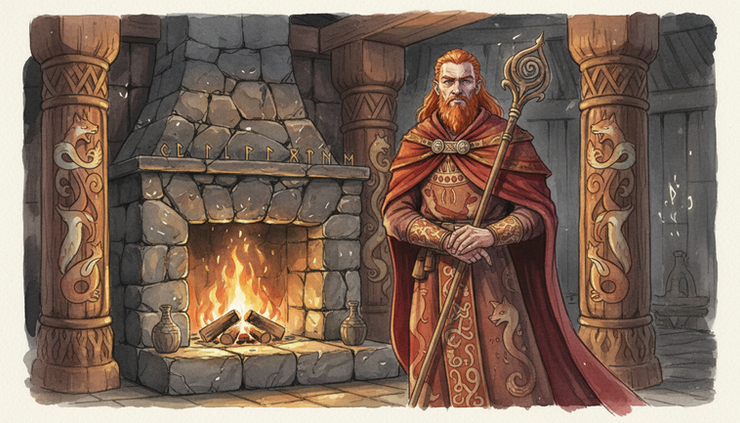
Loki’s place in Norse mythology
Loki appears most clearly in the Poetic Edda and the Prose Edda, two major medieval sources for Norse myth. These texts were written down after the Christianization of Iceland, so they preserve older stories through a later literary lens. That means modern readers should treat them with respect, but also with care.
Loki is often called a god, though his family ties are complex. His father is the giant Fárbauti, his mother is Laufey, and he moves among the Æsir, the main tribe of Norse gods. He is the blood brother of Odin, which gives him a place in divine society, even when the gods distrust him.
His children show his mythic range. With the giantess Angrboða, Loki fathers Fenrir the wolf, Jörmungandr the world serpent, and Hel, ruler of the dead. With his wife Sigyn, he has sons whose story becomes part of his punishment. As a shapeshifter, Loki also becomes the mare who gives birth to Sleipnir, Odin’s eight-legged horse.
That is Loki in miniature. He crosses boundaries that others treat as fixed.
He crosses:
Gender
Species
Social roles
Moral categories
Divine and giant kinship
Order and chaos
In Norse mythology, Loki is not simply “evil.” He is disruptive. Sometimes that disruption saves the gods. Sometimes it destroys trust. Often, it does both.
Key stories that reveal Loki’s nature
Loki’s myths work like sparks. Each one lights up a different side of him.
Loki cuts Sif’s hair and creates treasure
One famous tale begins with Loki cutting off the golden hair of Sif, Thor’s wife. Thor is furious and threatens him. To repair the damage, Loki goes to the dwarves, master smiths of the mythic world.
The result is a set of legendary treasures, including new golden hair for Sif, Mjölnir for Thor, Odin’s spear Gungnir, and Freyr’s ship Skíðblaðnir. Loki causes the crisis, then uses cunning to bring back gifts that strengthen the gods.
This story shows one of his classic patterns. Loki breaks the surface so something more powerful can emerge. The cost is real, but so is the gain.
Loki and the wall builder
In another tale, a mysterious builder offers to construct a wall around Asgard. His price is the sun, the moon, and the goddess Freyja. The gods accept after Loki suggests terms they believe the builder cannot meet.
When the builder comes close to success, the gods panic and blame Loki. Loki transforms into a mare, distracts the builder’s stallion, and prevents the bargain from being completed. Later, Loki gives birth to Sleipnir.
Here, Loki solves the problem through shapeshifting, seduction, and a total collapse of ordinary boundaries. The story is strange, comic, and unsettling. It also shows why Loki is linked with liminality, the power of the threshold.
Loki’s flyting in Lokasenna
In Lokasenna, Loki enters a feast and insults the gods one by one. He exposes hypocrisy, cowardice, lust, and shame. The poem is sharp and uncomfortable because Loki often tells truths that others want hidden.
That does not make him noble in the scene. His words wound. Yet the myth gives him the role of truth-speaker through mockery. Loki’s tongue is a blade, and it cuts both lies and bonds.
For modern readers and practitioners, this story matters. Loki’s honesty is rarely soft. Working with his energy can mean facing the truths that polite life has buried.
The death of Baldr and Loki’s binding
The darkest Loki story centers on Baldr, beloved of the gods. After Baldr becomes nearly invulnerable, Loki learns that mistletoe was overlooked. He guides the blind god Höðr into throwing a mistletoe weapon, killing Baldr.
This act marks a turning point. Loki is hunted down, bound with the entrails of his son, and placed beneath a serpent whose venom drips onto him. Sigyn holds a bowl to catch the venom, but when she turns to empty it, the venom strikes Loki and he writhes. His shaking causes earthquakes.
This myth is harrowing. It shows Loki as a figure of grief, consequence, and cosmic rupture. Later, at Ragnarök, he breaks free and stands against the gods.
Loki’s mythology does not ask readers to flatten him into hero or villain. It asks them to sit with the danger of intelligence without wisdom, truth without mercy, and change without consent.

Loki’s attributes and symbols
Loki does not have the same clear archaeological cult record as gods like Thor or Odin. Many modern associations come from the myths, later folklore, personal devotional experience, and contemporary practice. That is not a problem as long as people name the difference.
Common themes linked with Loki include:
Fire and spark
Loki is often associated with fire in modern practice, though this link is more devotional and interpretive than straightforwardly historical.
Trickery and wit
His cleverness saves him as often as it condemns him.
Shapeshifting
Loki becomes a salmon, a mare, a fly, and more. Transformation is central to his power.
The outsider
He belongs among the gods, yet never fully fits. Many modern devotees connect with Loki through experiences of being misread, excluded, or forced to adapt.
Shadow and truth
Loki reveals what people hide. He can be a patron of uncomfortable honesty.
Animals sometimes used in modern Loki symbolism include foxes, snakes, spiders, and salmon. None should be treated as universal or mandatory. Loki is fluid by nature, and devotional language around him changes across communities.
Loki in contemporary culture
For many people, the first image of Loki comes from comics, film, television, or fantasy novels. Modern pop culture has made him charming, wounded, stylish, and morally complex. These portrayals are not the same as Norse mythology, but they have shaped public interest in the old stories.
That renewed interest has led many readers back to the Eddas, sagas, and modern scholarship. It has also opened the door for people who feel drawn to Loki as a spiritual figure rather than only a character.
This can create tension. Some practitioners prefer strict historical grounding. Others accept that living spirituality grows through new experience. A balanced approach can honor both.
A helpful distinction is:
Lore-based understanding
Modern devotion
What surviving myths, poems, and historical sources suggest
How people build relationships with Loki through prayer, offerings, meditation, and personal experience
Both can matter. The key is honesty. If an idea comes from the Eddas, say so. If it comes from personal experience, call it personal experience. In many pagan and witchcraft communities, this is often called UPG, or unverified personal gnosis.
How modern devotion to Loki has evolved
Modern Loki devotion has grown within broader Heathen, pagan, occult, and witchcraft communities. Some followers call themselves Lokeans, though not everyone who honors Loki uses that label.
Devotion to Loki today often centers on relationship rather than dogma. Followers may see him as a deity of transformation, radical honesty, survival, humor, queerness, neurodivergence, boundary crossing, or necessary disruption. For some, he is a beloved god. For others, he is a difficult teacher. For many, he is both.
Common devotional practices include:
Lighting a candle in his honor
Offering coffee, cinnamon, spicy foods, alcohol, sweets, or handmade items
Reading and reflecting on Loki’s myths
Journaling after dreams, signs, or ritual work
Keeping an altar with symbols of change, flame, or trickster animals
Speaking prayers that are direct, witty, and honest
Supporting people who live at the margins, as an offering through action
Modern devotion also includes debate. Some Heathen groups have rejected Loki because of his role in Baldr’s death and Ragnarök. Others argue that excluding him oversimplifies the myths and ignores his deep ties to the gods.
Among followers today, Loki is often approached with respect, boundaries, and a sense of humor. He is not usually seen as a tame or comforting presence. He may bring growth through surprise, discomfort, and sudden clarity.

Working with Loki in modern witchcraft
Working with Loki in modern witchcraft calls for curiosity, courage, and clear boundaries. His energy can feel quick, hot, funny, restless, and piercing. Some people experience him through sudden jokes, repeated symbols, dreams, disrupted plans, or a push to stop lying to themselves.
Before beginning, read his myths. Not just summaries. Sit with the complexity. Loki is not a wish-granting trickster mascot. He is a powerful mythic being tied to both creation and destruction.
Begin with a clear invitation
Start small. A simple ritual is enough.
You might light a candle and say something like:
Loki, son of Laufey, shapeshifter and truth-speaker, I greet you with respect. If it is right for us to know each other, may the connection unfold clearly and safely.
Then sit in silence. Notice thoughts, body sensations, emotions, and outside events, but do not force meaning onto every flicker of flame. Discernment matters.
Choose offerings with intention
Offerings do not need to be expensive. They should be thoughtful. Loki often seems to appreciate sincerity over formality.
Possible offerings include:
Strong coffee
Cinnamon candy or spicy food
A small glass of whiskey or mead, if alcohol is appropriate for your practice
Red, orange, or gold candles
Jokes, poems, or clever writing
Handmade art
Acts of truth-telling
Help given to outsiders, misfits, or people in crisis
Dispose of offerings respectfully. Food can be composted when safe. Liquids can be poured outside if local rules and environmental conditions allow. If you live in an apartment, a sink disposal with thanks is acceptable in many modern practices.
Build rituals around change
Loki is well suited to magic that involves transformation, courage, and release.
Good ritual themes include:
Breaking unhealthy patterns
Revealing hidden truth
Reclaiming humor after hardship
Adapting to sudden change
Shadow work
Creative risk
Protection during transition
A simple transformation spell could use a red candle, a slip of paper, and a fire-safe bowl. Write one pattern you are ready to release. Speak honestly about what it has cost you. Burn the paper safely, then write one brave action you will take within the next week. Loki’s magic often works best when paired with real-world movement.
Keep boundaries and records
Loki’s energy can stir chaos, especially for people who romanticize disruption. Boundaries help keep the work grounded.
Try these practices:
State what kinds of signs you will accept.
Ask for clarity, not constant spectacle.
Keep a journal of dreams, rituals, moods, and outcomes.
Do not make major life decisions based only on a sign.
Balance Loki work with grounding practices, ancestors, land spirits, or deities associated with stability.
A strong relationship with Loki does not require constant crisis. If devotion leaves someone isolated, reckless, or afraid, it is time to pause and seek balance.
Respecting Loki without flattening him
Loki’s appeal is easy to understand. He speaks to people who have survived by adapting. He speaks to artists, witches, outsiders, comedians, truth-tellers, and anyone who has had to rebuild a self from broken pieces.
Still, respect means allowing him to remain difficult. Loki is not only a symbol of freedom. He is also a warning about harm, pride, and consequences. His stories ask hard questions.
When does truth become cruelty?
When does cleverness become manipulation?
When does change become destruction?
These questions make Loki spiritually useful. They keep his devotion from becoming shallow.

A balanced path with the trickster
Loki in myth and magic remains powerful because he resists easy answers. He is the maker of trouble and the maker of treasures. He is the voice that mocks false virtue and the force that can break what others hoped would last. He belongs to old Norse stories, modern altars, pop culture imagination, and living spiritual practice.
For newcomers, the best first step is reading the myths and making one honest offering. For seasoned practitioners, Loki may call for deeper work with shadow, change, and accountability. In both cases, the heart of the practice is the same: stay awake, stay honest, and keep your sense of humor close.
Loki rarely arrives to keep everything comfortable. He arrives with a spark. What that spark becomes depends on the care, courage, and truth brought to the flame.

Comments