What is Witchcraft?

Witchcraft is often shown as a pointed hat, a bubbling cauldron, or a dramatic spell cast under a full moon. Real practice is usually quieter. It may look like lighting a candle with intention, keeping a journal of moon phases, learning local plants, honoring ancestors, meditating, or marking the seasons with simple rites.
Still, the words can get confusing fast. Witchcraft, Wicca, and paganism are related for many people, but they do not mean the same thing. Some witches are Wiccan. Many are not. Some pagans practice witchcraft. Others never cast spells at all.
This guide explains the differences, the history behind these paths, and practical ways to begin with care, curiosity, and respect.

Witchcraft, Wicca, and paganism mean different things
The three terms overlap, but each has its own center of gravity.
Term | Basic meaning | Key point |
Witchcraft | A practice of magic, spellwork, ritual, folk healing, divination, or spiritual intention | It is a craft or practice, not one single religion |
Wicca | A modern pagan religion that often includes ritual magic, reverence for nature, and deity worship | It has specific religious roots and traditions |
Paganism | A broad umbrella for religions and spiritual paths outside the main Abrahamic traditions, often nature-centered or polytheistic | It includes many paths, with or without magic |
Witchcraft is a practice
Witchcraft is best understood as a set of practices. It can include spells, charms, herbal work, divination, energy work, protective rituals, ancestor veneration, and seasonal observances.
A witch might work with candles, plants, symbols, chants, prayer, meditation, or ritual tools. Some witches believe magic changes the world through spiritual forces. Others see it as focused intention, psychology, symbolism, and personal transformation.
Witchcraft can be religious, but it does not have to be. A Christian folk practitioner, a secular witch, a pagan witch, and a Wiccan witch may all use the word “witch,” while holding very different beliefs.
Wicca is a modern religion
Wicca is a modern pagan religion that became publicly known in the mid-20th century, especially through the work of Gerald Gardner in England. Many forms of Wicca honor a Goddess and a God, celebrate seasonal festivals, and practice ritual magic.
Wicca is not one single church. Some traditions are initiatory and coven-based. Others are solitary and eclectic. Many Wiccans follow ethical teachings such as the Wiccan Rede, often summarized as “harm none,” though different groups interpret it in different ways.
Wicca often includes witchcraft, but not every witch is Wiccan.
Paganism is a broad umbrella
Paganism covers many earth-honoring, polytheistic, animist, reconstructionist, and goddess-centered paths. Some pagans honor ancient deities from Greek, Norse, Celtic, Egyptian, Roman, or other traditions. Some follow modern nature spirituality. Some build household rituals around the seasons, ancestors, and land.
A pagan may practice magic, but paganism itself is not the same as witchcraft. A person can be pagan and never cast a spell. A person can also practice witchcraft without identifying as pagan.
The history is older, messier, and richer than the stereotypes
Witchcraft has never meant just one thing. Across cultures, people have used charms, prayers, plant knowledge, divination, and ritual to seek healing, protection, love, luck, justice, or spiritual contact.
In many communities, folk healers, cunning folk, midwives, rootworkers, charmers, and spiritual specialists held practical roles. They might bless a home, remove a curse, make a protective amulet, read omens, or prepare herbal remedies.
At the same time, the word “witch” has a painful history. In Europe and colonial America, accusations of witchcraft could lead to social ruin, imprisonment, or death. These accusations often reflected fear, religious conflict, misogyny, class tension, land disputes, or suspicion of outsiders. The Salem witch trials of 1692 remain one of the most famous examples in the United States, though witch hunts happened in many places and times.
Modern witchcraft often reclaims the word “witch” as a sign of personal power, spiritual independence, healing, and connection with nature. That reclamation does not erase the painful history, but it does change how many people relate to the term today.
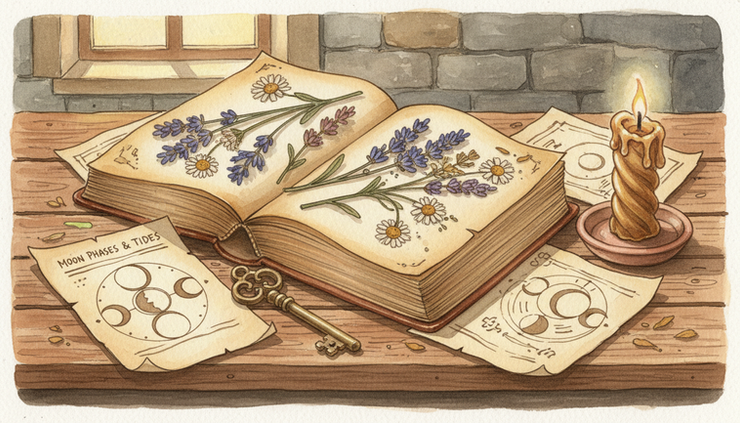
Wicca grew from modern pagan revival
Wicca is newer than many people expect. It draws inspiration from folk magic, ceremonial magic, seasonal festivals, mythology, and older pagan imagery, but its organized form developed in the 20th century.
Early Wicca grew during a time when many people in Europe and North America were rethinking religion, nature, psychology, and ritual. Some were drawn to pre-Christian symbols. Others wanted spiritual spaces that honored the divine feminine, the cycles of nature, and direct personal experience.
Common Wiccan elements include:
The Wheel of the Year
Eight seasonal festivals, often including solstices, equinoxes, and cross-quarter days such as Samhain and Beltane.
Ritual circles
Sacred space is created before ritual, often by calling directions or elements.
Deity devotion
Many Wiccans honor a Goddess and God, though some are duotheistic, polytheistic, pantheistic, or eclectic.
Magic and intention
Spellwork may be part of worship, healing, protection, or personal growth.
Wicca is sometimes misunderstood as ancient in its exact current form. A more accurate view is that it is a modern religion inspired by older materials, revived symbols, and living ritual creativity.
Paganism includes many paths
Paganism is not one religion with one book, founder, or creed. It is a wide family of traditions. That variety is part of its appeal, but it also means beginners need to move slowly and learn the differences.
Some common pagan paths include:
Hellenic paganism
Honors Greek deities such as Athena, Apollo, Demeter, or Hermes.
Heathenry
Centers on Norse or Germanic gods, ancestors, land spirits, and community rites.
Druidry
Often focuses on nature, poetry, seasonal ritual, and Celtic-inspired spirituality.
Kemetic paganism
Honors ancient Egyptian deities such as Isis, Osiris, Bast, or Ra.
Eclectic paganism
Blends practices from multiple sources, ideally with study and respect.
Because paganism often works with culture-specific deities and rites, respect matters. Learn from reliable sources. Avoid taking closed or living Indigenous practices without permission. When in doubt, study the history and listen to people from that tradition.
How beginners can start practicing witchcraft
A beginner does not need expensive tools, rare crystals, or a perfect altar. A clear mind, honest intention, and a notebook can take you far.
Start with study before spellwork
Read widely before copying rituals from random posts or videos. Look for books and teachers that explain ethics, history, and context, not only spells.
Good beginner topics include:
Basic protection and cleansing
Moon phases and seasonal cycles
Meditation and grounding
Symbolism and correspondences
Local plants and safety
Divination basics
Ethics around consent and influence
Keep a journal, often called a book of shadows or a practice notebook. Record what you tried, what you felt, what changed, and what you learned.
Build a simple altar or practice space
An altar is a focus point. It does not need to be permanent or public. A shelf, tray, windowsill, or small box can work.
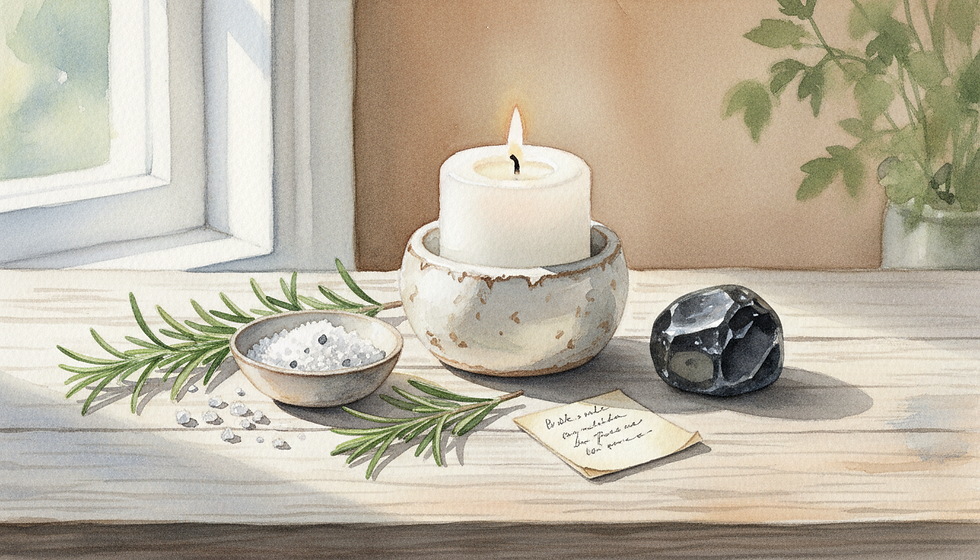
A simple beginner setup might include:
A candle
A bowl of water
A pinch of salt
A stone, shell, feather, or leaf
A small image, symbol, or statue
A notebook and pen
Choose items that mean something. A stone from a favorite walk may serve better than an expensive crystal bought in a rush.
Learn grounding and protection
Grounding helps you feel steady before and after ritual. Protection helps set boundaries.
Try this simple grounding practice:
Sit with both feet on the floor.
Take five slow breaths.
Imagine roots growing from your body into the earth.
Picture stress draining down through those roots.
Imagine calm strength rising back up.
Write one sentence about how you feel.
This is simple, but it builds a strong base for later work.

Basic tools and what they are used for
Tools help focus the mind. They are not required, and they are not powerful by themselves. Meaning comes from use, care, and intention.
Tool | Common use | Beginner note |
Candle | Focus, prayer, timing, transformation | Start with unscented white candles |
Salt | Cleansing, protection, grounding | Keep away from soil and plants in large amounts |
Water | Blessing, emotion, intuition | Use clean water in a small bowl |
Herbs | Symbolic and practical magic | Learn safety before burning or ingesting anything |
Journal | Recording spells, dreams, results, study notes | This may become your most useful tool |
Tarot or oracle cards | Reflection, divination, self-inquiry | Pull one card at a time to learn slowly |
Bell or sound bowl | Clearing space, marking ritual start and end | Clapping works too |
Cloth or tray | Creates a defined practice area | Easy to pack away |
Be careful with fire, smoke, oils, and herbs. Natural does not always mean safe. Some plants are toxic. Some smoke can irritate lungs or harm pets. Never ingest herbs unless you know they are safe and appropriate for you.
Simple rituals to get started
These beginner rituals are gentle and adaptable. They do not require a specific religion. Change the wording to fit your beliefs.
A simple candle intention ritual
Use this for clarity, courage, study, peace, or another personal goal.
You need:
One candle
A fire-safe holder
A small piece of paper
A pen
Steps:
Write one clear intention on the paper.
Place the candle in its holder.
Take three slow breaths.
Read the intention aloud.
Light the candle safely.
Sit quietly for a few minutes and picture your next real-life step.
Snuff the candle when done.
Take that real-life step within 24 hours.
Magic works best when paired with action. If the intention is confidence, the next step might be sending the email, practicing the conversation, or signing up for the class.
A new moon reflection
The new moon is often used for rest, renewal, and beginnings.
Write answers to three prompts:
What am I ready to begin?
What support do I need?
What is one small step I can take this week?
Place the paper under a stone or candle holder overnight. Revisit it at the next full moon.
A basic home cleansing
This ritual refreshes a room and marks a new start.
You need:
A bowl of clean water
A pinch of salt
A bell, spoon and cup, or your hands for clapping
Steps:
Open a window if safe.
Add the salt to the water.
Walk around the room clockwise.
Clap, ring, or gently tap the cup to make sound.
Say, “This space is clear, calm, and protected.”
Dip your fingers in the water and touch the doorframe lightly.
Pour the water down the drain when finished.
Use smoke only if it is safe for your space, your body, and any animals nearby.

Helpful resources for continued learning
Seek resources that balance inspiration with history and ethics. A good resource explains where practices come from and avoids promising instant power or guaranteed results.
Useful places to start include:
Introductory books on modern witchcraft, Wicca, and paganism
Local metaphysical shops with classes or discussion groups
Public libraries with religion, folklore, and mythology sections
Museums and history books for cultural context
Botanical guides for local plant identification and safety
Community groups that clearly state their ethics and boundaries
Meditation and journaling practices from qualified teachers
When evaluating a teacher or author, ask:
Do they explain sources and context?
Do they respect closed traditions and living cultures?
Do they encourage consent and personal responsibility?
Do they welcome questions?
Do they avoid fear-based claims?
A grounded path leaves room for wonder without asking you to abandon critical thinking.
Good books for the beginner witch...
The Witches' Book of the Dead by Christian Day
Witchcraft for the Curious and Creepy by Amanda Yates Garcia
The Green Witch: Your Complete Guide to the Natural Magic of Herbs, Flowers, Essential Oils, and More by Arin Murphy-Hiscock
Wicca: A Guide for the Solitary Practitioner by Scott Cunningham
The Witch's Book of Shadows: The Craft, Lore & Magick of the Witch's Grimoire by Phyllis Curott
Encyclopedia of Witchcraft: The Western Tradition by Judika Illes
The Complete Book of Witchcraft by Raymond Buckland
Witchery: Embrace the Witch Within by Juliet Diaz
Earth Magic: Ancient Shamanic Wisdom for Healing Yourself, Your Family, and the Planet by Steven D. Farmer
Ethics make the practice stronger
Beginner witchcraft often raises questions about love spells, curses, spirit contact, and influence. Different traditions answer those questions in different ways, but a few principles help keep practice healthy.
Respect consent. Avoid spells that try to control another person’s will. Focus instead on your own healing, courage, clarity, boundaries, and attraction of healthy opportunities.
Stay honest. Do not use spiritual language to avoid practical choices. A protection spell can support you, but it should not replace changing locks, asking for help, or leaving an unsafe situation.
Honor sources. If a ritual comes from a specific culture, learn its background. Some traditions are open to respectful learners. Others are closed or require initiation, ancestry, or community permission.
Keep records. Your journal helps you see patterns. It also keeps you from exaggerating results or forgetting what actually happened.
A grounded path can still feel magical
Witchcraft, Wicca, and paganism all offer ways to build meaning through ritual, nature, symbol, and attention. Witchcraft is the practice. Wicca is a modern pagan religion that often includes witchcraft. Paganism is the broader umbrella that holds many earth-centered and polytheistic paths.
The best beginning is simple: read, observe, journal, and try small rituals with care. Light one candle. Learn one plant. Watch one moon cycle. Mark one seasonal change. Over time, those small acts can become a practice that feels thoughtful, personal, and alive.


Comments